|
|
COINS WE BUY AT CT GOLD AND SILVER
|
||||||
|---|---|---|---|---|---|---|---|
|
|
|||||||
|
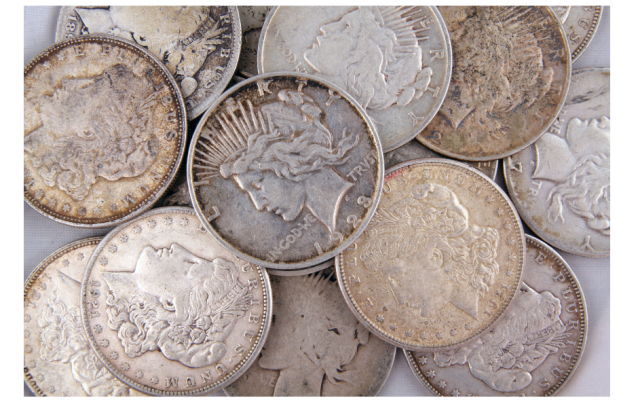
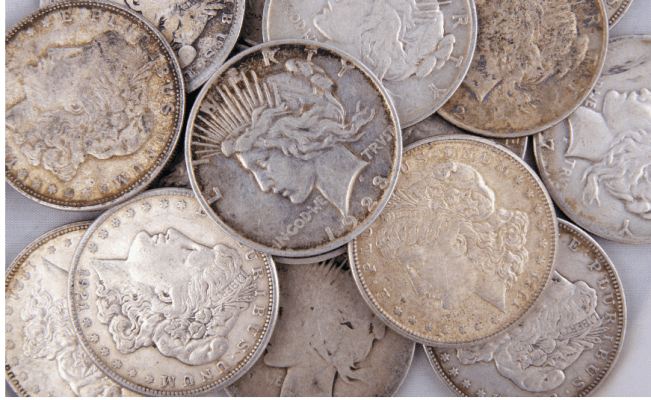
US COINS HISTORY U.S. coins have changed many times since the Coinage Act of 1792, which adopted the dollar as the standard monetary unit. Silver dollars have been minted and issued at various times since 1794. Dollar coins were discontinued in 1935, then resumed in 1971 with the introduction of the silverless Eisenhower dollar. The silverless Susan B. Anthony coin, honoring the famed women's suffrage advocate, replaced the Eisenhower dollar in 1979. A new dollar coin authorized in 1997 replaced the Susan B. Anthony coins in 2000. The new coin depicts Sacagawea, the Native American woman whose presence was essential to the success of the Lewis and Clark expedition. The coin has a copper core clad in an alloy of copper, zinc, manganese, and nickel, which gives the coin a golden color. Half-dollars virtually disappeared from circulation following the introduction, in 1964, of the Kennedy half-dollar. Despite the fact that huge quantities were produced, the half-dollar remained scarce in general circulation through 1970. Silverless halves first appeared in 1971. Other coin denominations in common use today are the 25-cent, 10-cent, five-cent, and one-cent pieces, familiarly known as the quarter, dime, nickel, and penny. The composition of U.S. coins has changed considerably over the past few decades. Because of a growing worldwide silver shortage, the Coinage Act of 1965 authorized a change in the composition of dimes, quarters, and half-dollars, which had been 90 percent silver. Silver was eliminated from the dime and the quarter. The half-dollar's silver content was reduced to 40 percent and, after 1970, was eliminated altogether. In 1981 Congress authorized a change in the penny's composition, abandoning the 95 percent copper and 5 percent zinc alloy used for decades. The one-cent piece is now copper-plated zinc—97.5 percent zinc and 2.5 percent copper. The old and new pennies look virtually identical, but the new coin is about 19 percent lighter.
U.S. coin denominations used in the past were
the half-cent, two-cent, three-cent, and 20-cent pieces, as well as a small
silver coin called a half-dime. Gold coins in denominations of $1, $2.50
("Quarter Eagle"), $3, $5 ("Half Eagle"), $10 ("Eagle"), and $20 ("Double
Eagle") were used from 1795 until 1933. The Mint The U.S. Mint, which makes all U.S. coins, was established by Congress in 1792 and became an operating bureau of the Treasury Department in 1873. The Philadelphia Mint has been in continuous operation since 1792. The Denver Mint began its coinage operations in 1906. The West Point, New York, and San Francisco Mints gained official Mint status in 1988. Originally an assay office, the San Francisco Mint is the primary production facility for proof coins. The West Point Mint, once used exclusively as a bullion depository, is now the Mint's chief producer of gold coins. U.S. coins typically bear a mint mark showing which mint produced them. Coins minted in Philadelphia bear a P or no mint mark; those minted in Denver, a D; in San Francisco, an S; and in West Point, a W. Although the Coinage Act of 1965 specified that no mint marks would be used for five years, Congress authorized in late 1967 that mint marks be resumed. The marks reappeared on regular coinage in 1968. Several branch mints are no longer in operation. These mints were located in Carson City, Nevada (mint mark, CC); Charlotte, North Carolina (C); Dahlonega, Georgia (D); and New Orleans, Louisiana (O).
|